
Click here for search results

Doing More with Less: Addressing the Fiscal Crisis by Increasing Public Sector Productivity


INTRODUCTION

This report responds to a specific request from the Serbian Minister of Finance. In the face of slowing economic growth, the Government faces the prospect of increasing deficits in the short and medium term, due largely to growing pension obligations. The problem cannot be addressed by increasing revenues: the public sector is already oversized. The Ministry of Finance has therefore asked the Bank to identify opportunities for constraining growth in expenditures, without sacrificing the quality of public services. This report is therefore focused on identifying opportunities for efficiency gains in the major categories of Government expenditure.
Read More [pdf: 163kB]

.
 
Full Report [1.89 MB]
Full Report (Serbian) [2.21MB]
Executive Summary [39kB]
 
1. PENSIONS

Pensions are the largest single program of government expenditure. Costs are high, due in part to generous benefits. The pension due to a new retiree in Serbia is equal to nearly 60 percent of the net average wage. As a short term response to the fiscal crisis, the Government has decided to freeze pension levels in nominal terms in 2009 and 2010. In the longer term, the existing system of pension indexation will substantially reduce the financial burden of the pension system.

PDFRead More [pdf: 163kB]

2. HEALTH

Despite an array of management improvements to date, the Serbian health care system still suffers from a wide range of inefficiencies. The Government is now in the process of reforming the health financing system. For primary care, it will adopt a capitation based payment system, in which primary physicians are paid according to the number of patients on their rosters. For higher level (hospital) care, the Ministry of Health and the Health Insurance Fund intend to move to an output-based (Diagnostic-related Group) or prospective hospital payment) system.

PDFRead More [pdf: 120kB]

3. EDUCATION

The level of government spending on education in Serbia is comparable to other European countries (as a percent of GDP) but its outcomes are considerably poorer. There is evidence that significant savings could be achieved through the rationalization of the school network, particularly at the primary level, without reducing education quality. Serbia has too many teachers, given its present student population. As a result, many classes are inefficiently small.

PDFRead More [pdf: 168kB]

4. SOCIAL ASSISTANCE
Serbia spends relatively little on social assistance. Of the little that is spent, less than one quarter is specifically targeted to poor households. The two poverty targeted programs - the MOP and the child allowance - are nevertheless well designed although under-funded. As the recession is likely to increase the number of needy households, the Government should consider increasing funding for these two programs.

PDFRead More [pdf: 93.5kB]

5. AGRICULTURAL & ENTERPRISE SUBSIDIES
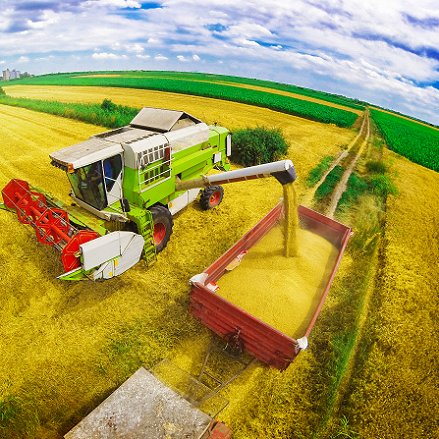
The Government spends a significant amount on agricultural subsidies, largely in the form of a fixed payment per hectare. The area-based payment should be scaled back and means tested. The system of subsidies to manufacturing and mining enterprises is in transition.

PDFRead More [pdf: 71kB]

6. ROADS
Serbia has a history of under-funding maintenance, which has led to the deterioration of much of the regional road network. The Government‘s current priority, nevertheless, is to upgrade segments of Corridor X (which, despite its foreign financing, still implies a considerable Government counterpart contribution).

PDFRead More [pdf: 163kB]

7. RAILROADS
Current subsidies to the state railway company are insufficient to cover its operating losses. The Government nevertheless intends to invest over RSD144 billion in upgrading rail service in Corridor X. Immediate savings could be achieved by postponing the start of works in Corridor X and by reducing the design speed of the proposed works from 160 km/hr to 120 km/hr.

PDFRead More [pdf: 110kB]

8. SUMMING UP
The impact of the efficiency measures proposed in this report will take more time to materialize. The Government should, nevertheless, make an immediate start. While the fiscal impact of these reforms will be evident over the medium term, their most important impact will be on the quality of public services. The reforms will stand Serbia in good stead even after economic growth resumes.

PDFRead More [pdf: 617kB]


Permanent URL for this page: http://go.worldbank.org/1GLCUXEJY0